Ellis Simmons · 2 October 2026
How Eye-Based Identification Pairs with Signal Beacons to Streamline Emergency Evacuation Protocols
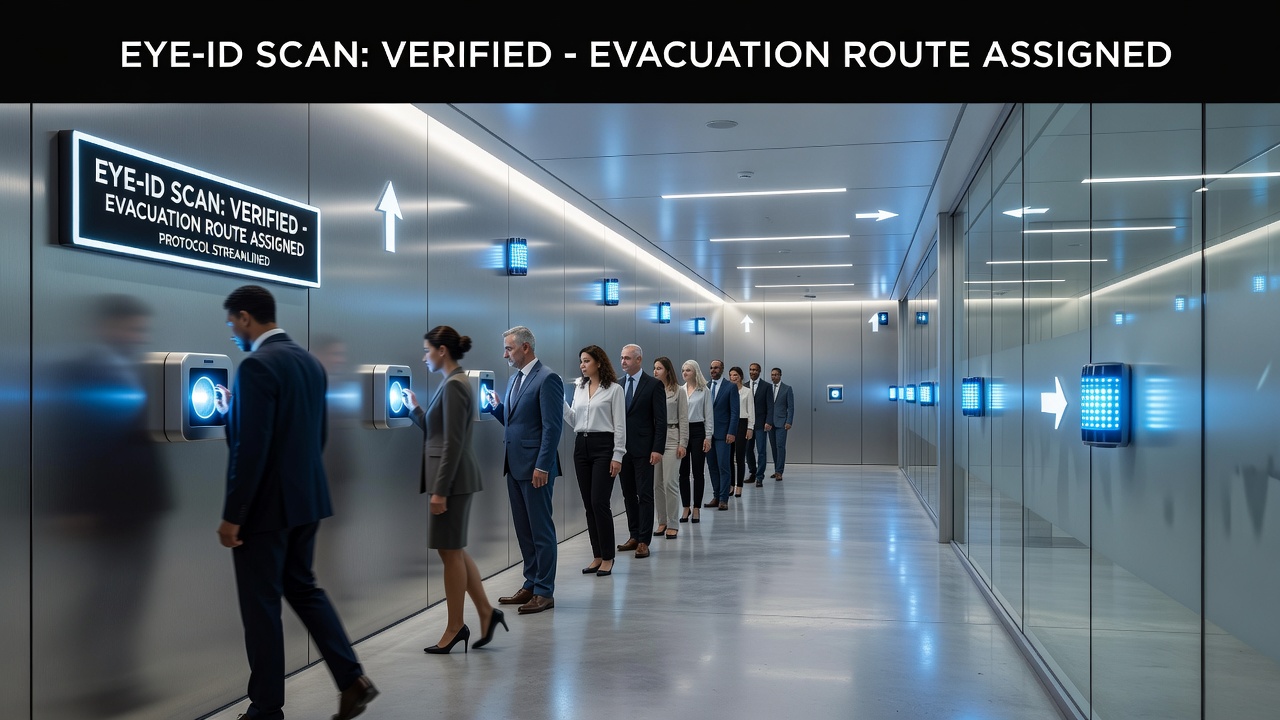
Eye-based identification systems rely on iris pattern recognition and retinal scanning technologies that capture unique biometric markers to verify individual identities within seconds, and these capabilities combine with signal beacons that transmit location-specific data to direct movement during crises. Researchers at various institutions have documented how such pairings reduce evacuation times in controlled tests by matching verified personnel data with real-time beacon signals that adjust routes based on crowd density and hazard zones. Data from multiple field trials indicates that the integration allows automated systems to confirm who has exited specific areas while beacons emit directional alerts through mobile devices or wearable interfaces.
Core Components of the Technology Pairing
Iris scanners positioned at entry points and along pathways feed biometric profiles into centralized databases that cross-reference with employee or visitor manifests, whereas signal beacons placed at intersections and stairwells broadcast encrypted location pings that update every few seconds. Studies conducted across North American facilities show that this dual mechanism enables responders to track movement patterns without manual headcounts, and the beacons can reroute individuals when primary paths become obstructed. Public Safety Canada reports highlight similar deployments where beacon networks synchronized with biometric logs improved accountability rates during simulated building evacuations involving several hundred participants.
Signal strength adjustments occur automatically when sensors detect anomalies such as smoke or structural shifts, and the eye-based systems trigger personalized notifications that include verified identity confirmations before granting access to alternative exits. Observers note that the combination minimizes bottlenecks because verified users receive priority routing instructions through connected applications or overhead displays. In October 2026, several European testing sites plan expanded trials that will measure latency reductions when beacon intervals align with biometric verification cycles under varying load conditions.
Implementation in Large-Scale Facilities
Airports and corporate campuses have adopted these paired systems to handle high volumes of transient populations, and integration with existing access control databases allows seamless verification during both routine operations and sudden alerts. Figures from the National Institute of Standards and Technology reveal that biometric match rates exceed 99 percent in optimal lighting when paired with calibrated beacons that account for signal interference from dense materials. Those managing high-rise structures often install redundant beacon arrays at each floor level so that any single failure does not disrupt the overall guidance network.
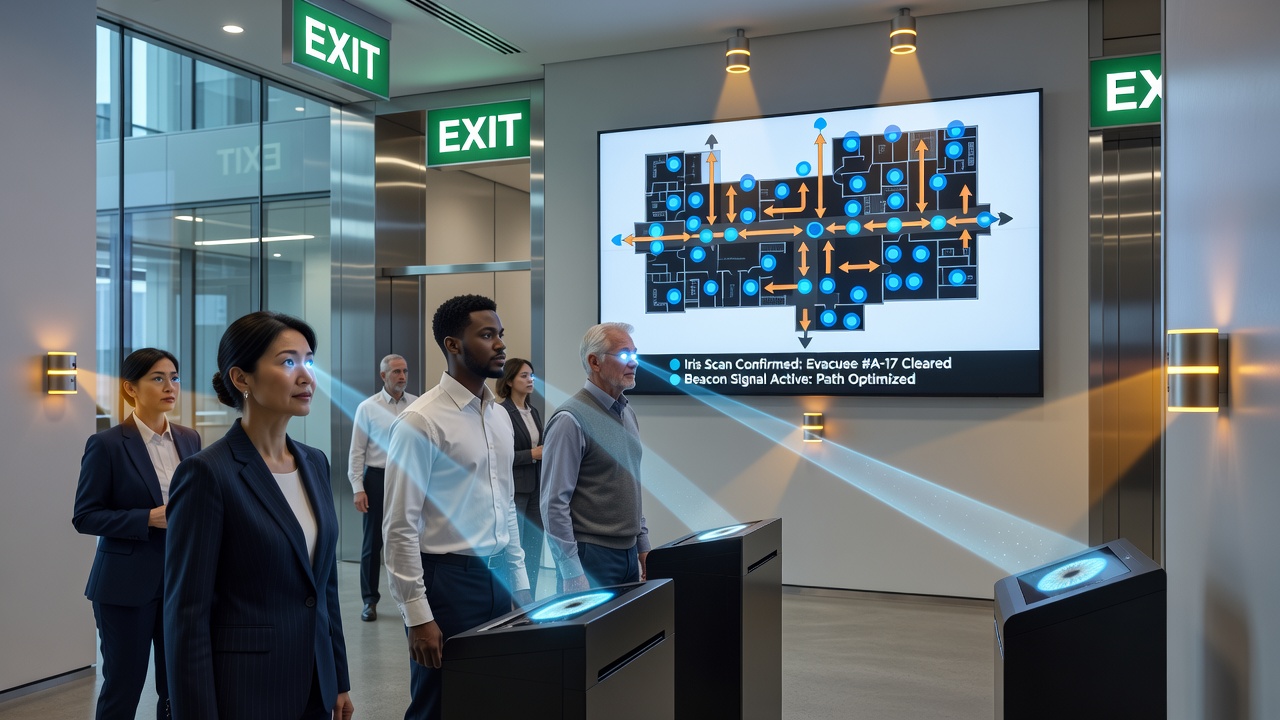
Training programs for facility staff emphasize the need to calibrate scanners for diverse eye conditions and to map beacon coverage so that dead zones receive supplementary units. Evidence from Australian emergency management exercises demonstrates that combining these technologies cuts average clearance times by measurable margins when compared with beacon-only setups, and the biometric layer adds an audit trail that satisfies regulatory requirements for accountability. Emergency planners in multiple regions continue to refine the protocols based on data collected from repeated drills that simulate blocked exits and power fluctuations.
Data Flow and System Reliability
Biometric templates remain encrypted during transmission between scanners and central servers while beacon signals carry anonymized location codes that link back to verified identities only when an alert activates the full protocol. This layered approach keeps routine operations lightweight yet enables rapid correlation once evacuation mode engages. Research indicates that failover mechanisms switch to local beacon clusters if network connectivity drops, and the eye-based units retain cached profiles for offline matching that syncs later when connections restore. Those overseeing such installations stress the importance of regular firmware updates to maintain compatibility across hardware generations.
Case examples from Canadian research facilities illustrate how the system flagged incomplete evacuations within minutes by comparing scanned exits against initial headcounts, and beacons then directed remaining personnel along cleared corridors. The same setups have supported post-event analysis that identifies patterns in movement delays, allowing facilities to adjust signage or add supplementary beacons in problem areas. Data collected through these means feeds into broader emergency planning models used by government agencies across different continents.
Conclusion
Eye-based identification paired with signal beacons creates a closed-loop system that verifies identities and guides movement simultaneously, and ongoing deployments continue to generate performance metrics that inform refinements in both hardware placement and software algorithms. Organizations evaluating these solutions review documentation from standards bodies and regional emergency agencies to ensure alignment with local safety codes. The technology remains in active development with additional testing scheduled through late 2026 to address edge cases such as low-light conditions and high-density crowds.