Gisela Werner · 18 September 2026
Integrating Biometric Signals with Distributed Beacon Networks for Precision Environmental Data Validation in Remote Monitoring Setups
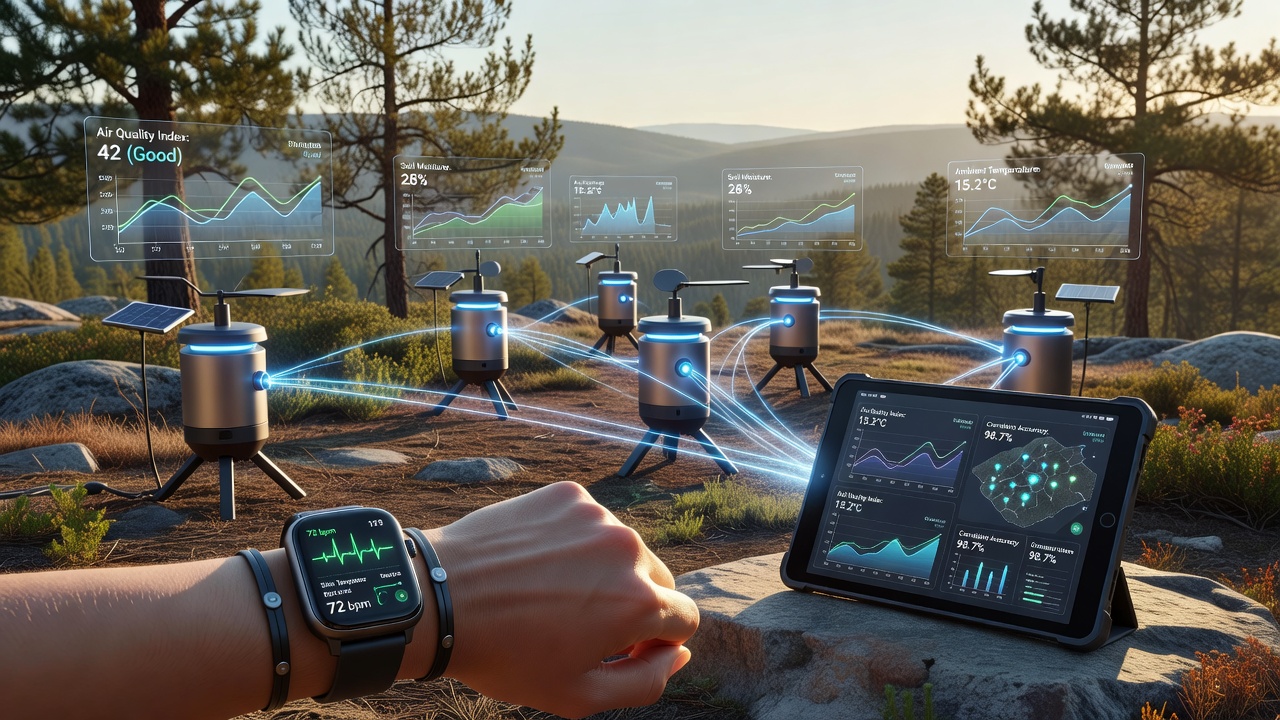
Distributed beacon networks have expanded rapidly in recent years as organizations seek reliable ways to collect and verify environmental measurements across difficult terrain, and researchers continue to examine how biometric signals can strengthen data accuracy in these systems. Biometric inputs such as heart rate variability, skin conductance, and respiratory patterns from field personnel or wildlife tags supply an independent layer of confirmation that helps flag anomalies in temperature, humidity, or air quality readings transmitted by the beacons.
Core Components of the Integrated System
Beacon hardware typically consists of low-power Bluetooth or LoRa devices placed at fixed intervals, each equipped with environmental sensors plus auxiliary ports for attaching biometric modules, while the network layer routes packets through mesh protocols that maintain connectivity even when individual nodes lose line-of-sight. Software platforms aggregate the incoming streams, apply time-stamped cross-checks, and run statistical filters that compare biometric-derived activity levels against expected environmental responses, such as increased personnel movement during sudden temperature shifts.
Studies from the Commonwealth Scientific and Industrial Research Organisation in Australia have documented how these cross-validation routines reduce false positives in wildfire detection arrays by as much as 18 percent when biometric confirmation is included. The same reports note that integration requires careful calibration of sampling rates so that biometric channels do not drain the shared power budget faster than the primary environmental sensors.
Data Validation Mechanisms
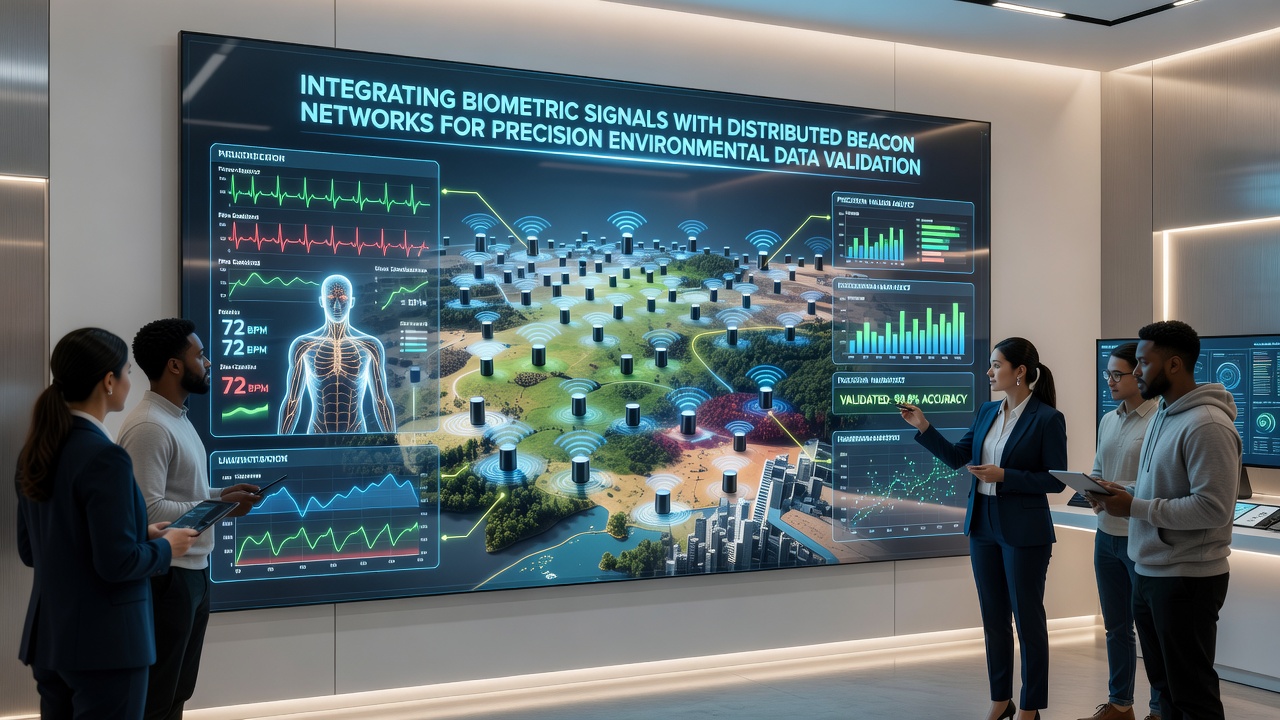
Validation occurs through layered algorithms that first align biometric timestamps with beacon readings, then apply threshold models to detect divergence beyond normal physiological ranges, and finally trigger secondary verification from neighboring nodes. When a temperature spike coincides with elevated heart rate readings from tagged personnel, the system logs the event as high-confidence rather than routing it for manual review, which shortens response times in remote operations.
Engineers have observed that placing biometric modules on both human operators and selected animal collars creates a broader reference set, allowing the network to distinguish between genuine environmental changes and sensor drift caused by dust accumulation or battery voltage drops. Field trials conducted in Canadian boreal forests during 2025 demonstrated that this dual-reference approach maintained 97 percent agreement with laboratory-grade instruments over six-month deployments.
Deployment Considerations in Remote Locations
Remote monitoring setups often operate under strict weight and power constraints, so system designers combine solar panels with supercapacitors to keep beacon clusters running through extended cloudy periods, while biometric attachments use ultra-low-energy chips that sample only during detected movement events. Installation crews must map terrain features that affect both radio propagation and the reliability of biometric signal transmission, because dense foliage can attenuate both environmental and physiological data packets.
Regulatory guidance from Environment and Climate Change Canada emphasizes the need for data sovereignty protocols when biometric information crosses international boundaries, requiring encryption standards that satisfy both environmental reporting rules and privacy statutes. Operators in September 2026 are expected to adopt updated firmware that incorporates these requirements without increasing latency beyond the two-second threshold currently accepted for most early-warning applications.
Case Examples from Current Projects
One ongoing project in the Australian outback links biometric vests worn by rangers with beacon arrays that monitor soil moisture and vegetation indices, allowing the network to confirm drought stress indicators only when physiological data shows consistent activity patterns rather than isolated sensor spikes. A separate European initiative coordinated by the European Environment Agency has tested similar configurations along alpine river basins, where biometric signals from fish tags help validate water temperature readings that influence migration models.
These examples illustrate how the integration extends beyond simple redundancy and into active calibration, because biometric baselines can reveal seasonal variations in human or animal response that environmental sensors alone might misinterpret as equipment faults. Data logs from both projects feed into public repositories that academic groups use to refine machine-learning models for future deployments.
Conclusion
The combination of biometric signals and distributed beacon networks supplies remote monitoring programs with an additional verification channel that improves precision without requiring heavier infrastructure. Continued refinement of power management, encryption methods, and cross-regional data standards will determine how widely these systems appear in operational use by late 2026 and beyond.